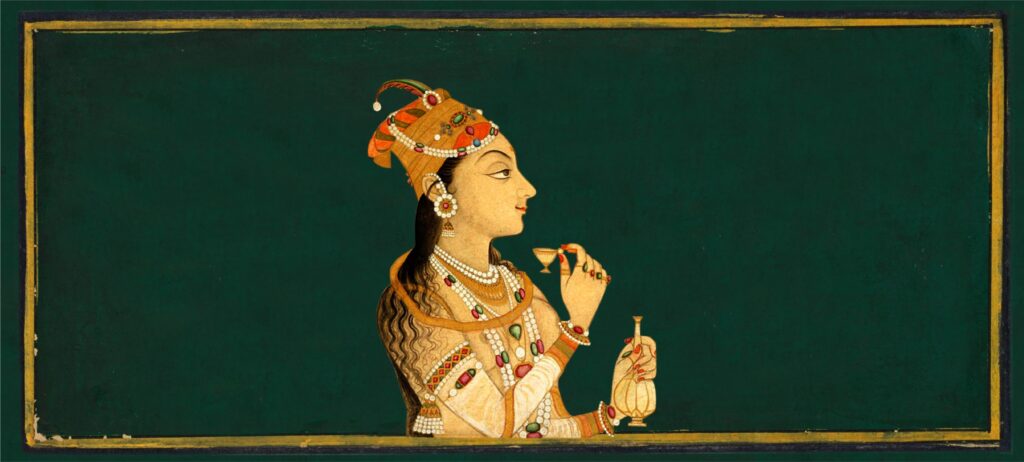
The seventeenth century stands as the zenith of Mughal hegemony. A period that witnessed the transformation of the empire from a regional power into a continental titan. In the seventeenth-century Mughal court, power was reserved for men. It was a male-dominated world, wherein the women of the zenana (harem as most commonly used) were oblivious of the court intrigues. They lived their lives in seclusion and veiled their many emotions and ambitions behind a curtain! The zenana consisted of the emperor’s mother, sisters, many wives, concubines, and other female relatives. The women of the Mughal harem wielded little to no influence on the emperor, let alone the court politics.
Yet, in the 17th-century Mughal court, there was one empress who was to rule the Mughal empire as a shadow sovereign. Who was to become the de facto ruler of the expansive empire and leave her mark in the annals of Mughal History. She was the twentieth and favorite wife of Emperor Jahangir – Nur Jahan! In a patriarchal set-up where direct participation in the public, political, and military administration was virtually unthinkable for a woman, Nur Jahan wielded such charismatic influence over Jahangir that, except for the Khutba read in her name, she was the only Mughal empress ever to exercise all the prerogatives of royalty.
Born in 1577 A.D near Qandahar to Mirza Giyas Baig and Asmat Begum, her rise from mediocrity to supremacy is nothing short of a spectacle. Mirza Giyas Baig and Asmat Begum fled Persia (Safavid Iran), escaping poverty and a political fallout, seeking better opportunities at the prosperous court of Mughal emperor Akbar in India. Once he had secured a lucrative position at the Mughal court, Mirza Giyas Beg, on the advice of Akbar, married his seventeen-year-old daughter, Mehr-un-Nisa (later to be named Nur Jahan by Jahangir), to Ali Quli, also known as Sher Afghan. After the death of Ali Quli, Mehr-un-Nisa was married to Jahangir in the year 1611. After marrying her, Jahangir gave Mehr-un-Nisa the title of Nur Mahal (Light of the Palace) and later Nur Jahan (Light of the world).
Jahangir was so enamored of Nur Jahan that he bestowed the royal right of managing the state on her. This not only filled the power vacuum created by the Emperor’s alcohol and opium addiction, but also benefited her own family and relatives. Through her charm, administrative acumen, diplomatic skills, and military strategies, Nur Jahan rose to power and prominence, becoming Jahangir’s final wife and the most prominent woman in the Mughal Empire.
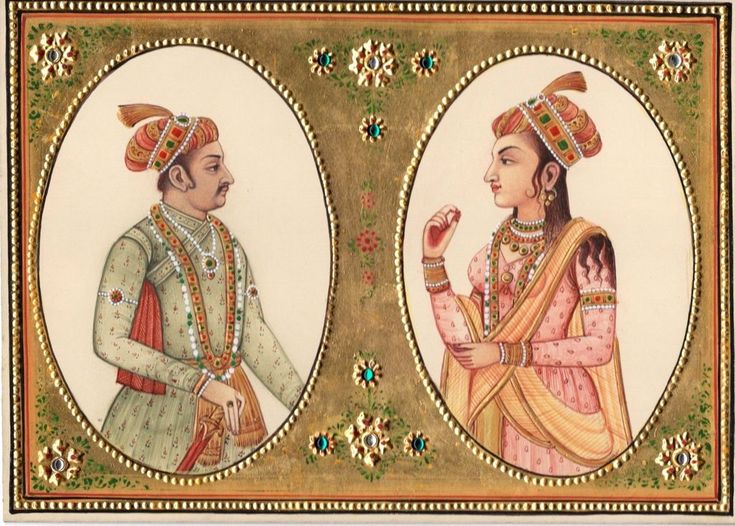
Nur Jahan had a significant role in the court Politics. She was part of a powerful group, the Junta, which consisted of Nur Jahan, her brother Asaf Khan, her father Itmad-ud-Daula (named so by Jahangir), and Prince Khurram (son of Jahangir). Her father became the chief minister, and her brother got involved in military matters. This enabled her to strengthen her influence at the court. This junta controlled all the major appointments, managed diplomatic correspondence, resolved court disputes, arranged marriages, and strengthened finances, etc.
Her exercise of power was unprecedented. She began appearing at the Jharokha-i-darshan alongside Jahangir, which, up until then, was strictly the reserve of the Mughal emperor. This solidified her ultimate imperial authority. The English Ambassador to the court of Jahangir, Sir Thomas Roe, noted with astonishment that “the king’s affection to her is such that by her all things are as she will, and she rules him”.
Jahangir, having invested so much power and trust in Nur Jahan, further bestowed on her the right to have her name inscribed on Mughal coinage alongside Jahangir’s. This was a definitive statement of co-sovereignty, a privilege no other Mughal empress had received.
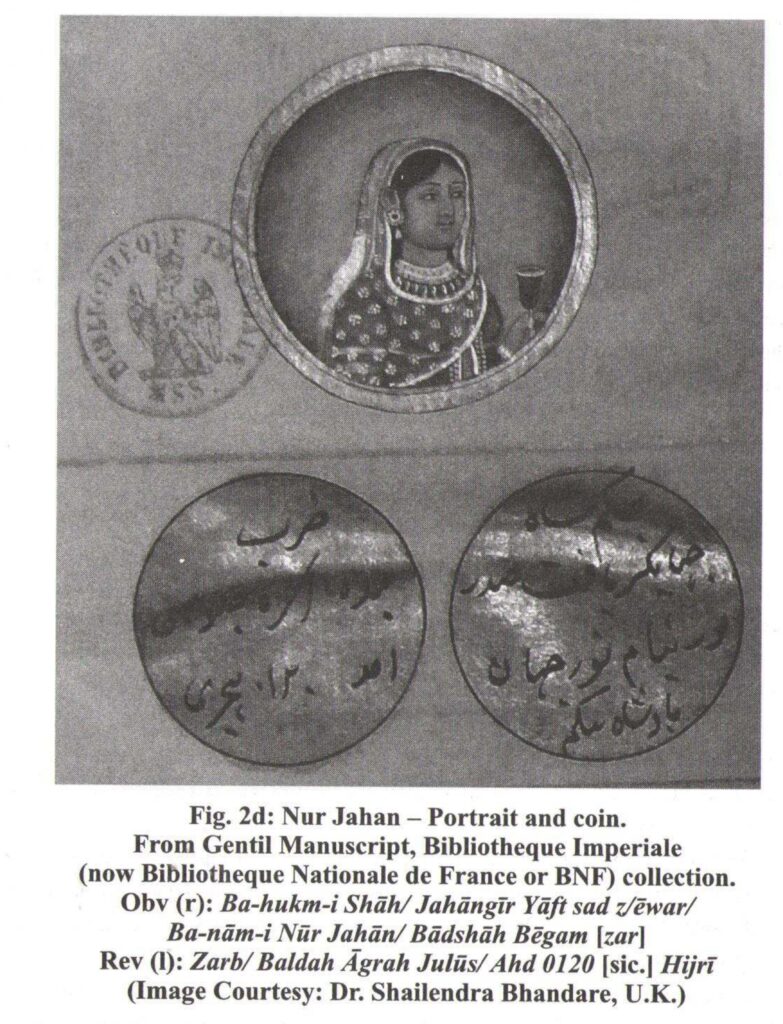
The coins of Nur Jahan with Persian couplets became well-known. A total of 8 mints issued coins in Nur Jahan’s name. The following Persian couplet was inscribed on her coins:
“By order of Shah Jahangir, gained a hundred beauties
Gold by the name of Nur Jahan, Badshah Begum.”
Besides issuing coins in her name, she also issued farmans (royal decrees) bearing her own seal. These royal decrees, which dealt with land grants, judicial appointments, and tax regulations, demonstrate her complete participation in the day-to-day administration of the empire. She had effectively shattered the political glass ceiling of Zenana!
The most compelling testament to Nur Jahan’s leadership occurred in 1626 when the rebellious general Mahabat Khan took Jahangir hostage. While there was panic within the military rank and file, it was Nur Jahan who led the charge. Riding atop an elephant, she led the imperial forces into battle with great courage and resolution. When she failed to rescue Jahangir by direct confrontation, she arranged to join Jahangir in captivity. From within the enemy camp, she orchestrated a master plan and rescued Jahangir. This shattered every conceivable norm for a woman of the zenana.
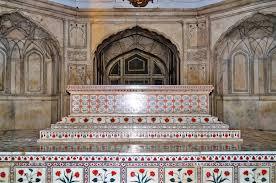
Beyond her administrative skills and military courage, her biggest contribution to the Mughal Empire is cultural and architectural patronage. She patronized textiles, creating new designs and fashioning them in sophisticated styles. She created new styles of dresses and jewelry that defined the fashion of the era and enhanced her prestige. Her most enduring legacy is architecture. The monuments and style of architecture she patronized set the standards of the era. She commissioned the tomb of her father, Itmad-ud-daula, in Agra, as well as the Mahal Sarai in Jalandhar. The tomb of Jahangir in Shahdara, Lahore, and her own tomb in Lahore are examples of her architectural marvel. She designed remarkable gardens such as Shalimar Bagh in Srinagar, Kashmir, which is an epitome of the Persian charbagh. Her cultural and architectural contributions reinforced her political authority, portraying her not as a usurper of power but as a refined and benevolent patron of the arts.
Nur Jahan understood the fundamental tenet of acquiring power: it does not always have to be direct confrontation! She worked within the established patriarchal institutions of the Mughal Empire. She used the channels available to a wife to gain influence at court. Her political power was reinforced by her independent wealth which she used to fund her architectural projects, build her own power base, and operate with a degree of security that her rivals lacked.
Nur Jahan was far more than a powerful empress. She was a political strategist, an administrative visionary, a military leader, and a fashion icon. She dismantled the shackles of patriarchy that were supposed to confine her to the zenana. She did not rule as a regent for a male relative; she ruled in her own right, through her coins, farmans, and culture of her time.
Her legacy has been contested even after till today. It has been smeared with bias, where she is often portrayed as a manipulative and power-hungry woman who led the emperor astray. Her success in the Mughal setup was so phenomenal that it generated anxiety, and the only way for the chroniclers to explain it was to label it as a dangerous aberration.
Nur Jahan’s story proves that true power does not always require a throne; it is an act of intellect, presence, and the strategic control of the state’s pulse. She truly became the “power behind the veil”, transforming the traditional role of a consort into that of a co-sovereign!
No responses yet